|
The mission of Five
E' Unlimited in watershed management assistance
is to lead and encourage the development of interdisciplinary
research and an adaptive, integrally-informed understanding
of social-ecological systems at the watershed level;
to transfer this knowledge to stakeholders; and to
provide a focus for collaboration among partners, sponsors
and clients. Our goal is to explore mechanisms for
building adaptive capacity and sustaining ecosystem
services in human-impacted watersheds; to work with
stakeholders - citizens action groups; industry; academia;
state, federal and local governments; and the general
public in identifying watershed problems and seeking
sustainable solutions; and to generate knowledge that
can serve as a resource for human actors to develop
their society and the natural conditions of their lives.
Few examples
of balanced economics and ecosystems exist among managed
lands. The key to successful long-term natural resource protection
and/or restoration lies in the sustainability of economic
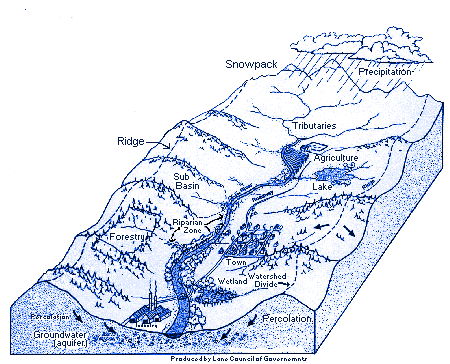
activities in the watershed. A watershed
is a ridge line or crest line dividing two catchment areas.
Watershed can also mean a definitive change, or turning point.
A watershed is that area of land, a bounded hydrologic system,
within which all living things are inextricably linked by
their common water course and where, as humans settled, simple
logic demanded that they become part of a community.
Water
is one of the most pressing issues the world faces.
The
different kind of land uses in watersheds directly
affects the quantity and quality of water available for
both human uses and to support ecosystem services. Smart
land development strategies have shown successes, but
have also encouraged inappropriate land use. For example,
suburban
sprawl’s high use of land on a per dwelling or
per capita basis is unsustainable. Likewise, land development
in water associated areas susceptible to natural disasters
puts people at risk and wastes valuable federal relief
funds.
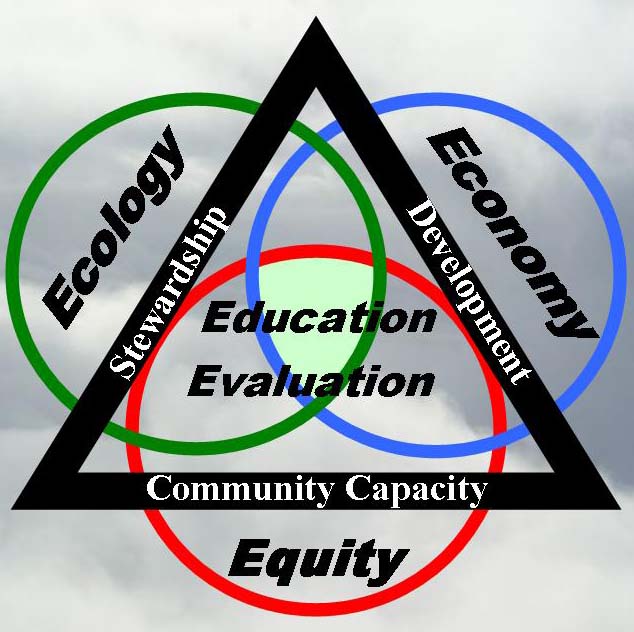
Five E's Unlimited employs
principles of landscape ecology in its work on watershed-wide
resource management and planning
because this approach simultaneously emphasizes understanding
the ecological, social, and economic consequences of changes
in urban and rural land-use and design, in the context
of "thinking like a watershed." (checkout the paper
by Warren Flint in 2006 entitled "Water resource
sustainable management: Thinking
like a watershed."
Annals of
Arid Zone 45(3 & 4): 399-423). Blending principles
from geography, sociology, economics, and ecology,
this
approach avoids short-sighted solutions and instead demands
a comprehensive understanding of how humans interact with
the built and natural environment to ensure sustainable
land-use that coincides with protection of both natural
resources and cultural assets.
We can help you integrate the
different elements of a watershed into adaptive
management strategies that will result in more sound land-use
and sustainability of both economies and natural
resources. WE CAN MEET YOUR NEEDS for protection
and restoration of valuable watershed natural resources
by working with you in the following
areas.
- Classifying critical watersheds to establish priorities
for conservation through the development of land-use
diversity and management strategies.
- Identifying critical
threats, such as surface and groundwater
pollution, to a watershed's integrity in order to protect
its resources and value to society.
- Making watershed
management recommendations to ensure sustainable, clean
water flow and the maintenance of
productive aquatic
resources.
- Identifying system-wide controlling processes
and mechanisms to distinguish environmental indicators
for ecosystem
health evaluation.
- Recommending land-use impact
mitigation, habitat restoration programs, and other
remediation techniques
in watershed
disputes.
- Analyzing the socio-economic value
of watersheds and their environmental services for
policy development
and management
planning.
Some of the different types of client work that Five E's Unlimited
has performed in Integrated Watershed Assessment includes the following.
- Investigation of interactions among land-use patterns, community
practices, water users, and industries to design actions
toward advancing equity, participation, and water resources
sustainability
for multiple watershed users.
- Development of a management
protocol for sustainable ecosystem restoration of coastal
bay watersheds with recommendations for
tools to evaluate restoration efforts using process/parameter
indicators.
- Use of remote sensing techniques in combination
with historical and new ground-truth verification data to
evaluate the
success of ecosystem protection goals in mid-Atlantic
coastal bay environments.
- Leading of multi-discipline teams
assuming responsibility for sound water resources use, information
needs research,
and community-based
environmental protection activities.
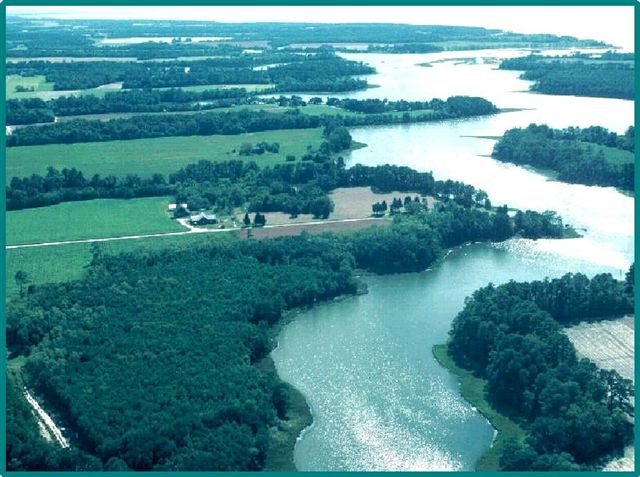
- Design of tributary
strategies in coastal bay watersheds that emphasize enhanced
vegetated buffer areas between
upland development
and coastal waters, significantly decreasing both
nutrient and suspended sediment flow to coastal bay waters.
- Provision of technical advice on sedimentation control, forestry
and range management, water conservation
management, wastewater
treatment facilities design, and technical information
dissemination systems.
- Design and facilitation
of public participatory approaches to integrated water resources
decision-making.
- Conduct of conflict resolution processes
to develop consensual use of water resources among competing
stakeholders and
recommendation of institutional arrangements
to achieve adaptive, integrated
watershed management.
Check
out our different watershed management projects
and discover what we can do for you.
|